A termite inspection is not a quick walk around the house looking for obvious damage. Termites often work out of sight, inside timber, beneath flooring, behind wall linings and through concealed entry points. So, what does a termite inspection consist of? It is a detailed, methodical assessment of accessible areas to identify termite activity, termite damage, conditions that attract termites and parts of the property that need closer attention.
For homeowners, landlords and property managers, the purpose is simple: understand the current risk to the property and receive straightforward recommendations before a small issue becomes an expensive structural repair.
What does a termite inspection consist of?
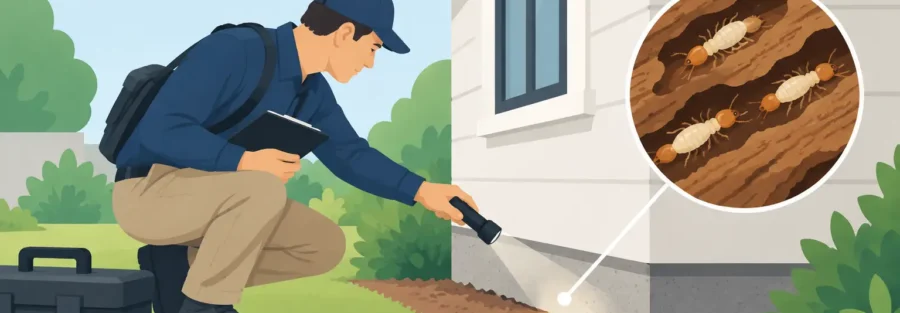
A professional termite inspection is primarily a visual inspection of accessible areas. The technician looks for evidence of live termites, past termite workings and conditions that allow termites to enter or remain close to a building.
The inspection generally begins with the exterior. This includes the perimeter of the building, external walls, foundations, weep holes, garden edges, fences, retaining walls, stored timber and other structures near the property. Termites commonly travel from soil to timber through sheltered routes, so the area where the home meets the ground deserves close attention.
Inside, the inspector checks accessible rooms, skirting boards, door frames, window frames, built-in cabinetry, timber floors, walls and visible roof timbers where appropriate. They will also inspect accessible subfloors, roof voids, garages, sheds and other attached or nearby structures. Commercial and strata properties may require a broader inspection based on the building layout, tenancy areas and shared spaces.
A thorough inspection does not rely on one sign alone. It combines visible evidence, the construction style of the building, nearby conditions and known termite risk factors to form a practical view of the property.
Looking for termite activity and damage
The most urgent part of an inspection is checking for signs of active termite activity. Depending on the species and the building, these signs can include mud shelter tubes, soft or hollow-sounding timber, damaged skirtings, blistered paint, tight-fitting doors or windows, and small piles of material around affected timber.
Mud tubes are particularly significant. Subterranean termites use these covered pathways to move between the soil and a food source while retaining moisture and avoiding exposure. However, not every infestation produces an obvious tube in an easy-to-see location. That is why an inspection needs to cover more than visible walls and timber surfaces.
The inspector may use tools such as a torch, sounding tool and moisture meter to assess accessible areas. Tapping or sounding timber can help identify changes beneath the surface, while moisture readings can highlight damp locations that may be more attractive to termites. These tools support the inspection, but they do not make hidden areas visible through solid walls or flooring.
If suspicious damage is found, the technician will assess whether it appears active, old or caused by another issue such as moisture deterioration, fungal decay or previous building movement. This distinction matters. Treating old damage as an active infestation can create unnecessary concern, while overlooking live termite activity can put the property at risk.
Checking the conditions that increase termite risk
A good termite inspection also considers why termites may be attracted to the property. Termite management is not only about finding insects. It is about reducing the conditions that support them.
Moisture is a common factor. Leaking taps, overflowing gutters, poor drainage, air-conditioning discharge and plumbing issues can create damp areas near the building. The inspector may identify these conditions and recommend repairs or drainage improvements as part of a broader prevention plan.
Timber-to-soil contact is another concern. Garden beds built high against walls, timber sleepers, stored firewood, mulch, old stumps and timber landscaping can provide concealed pathways or food sources near the home. These items do not automatically mean termites are present, but they can increase the chance of activity and make inspection more difficult.
The inspection also considers whether weep holes, ventilation openings and subfloor access are clear and visible. Blocked or covered weep holes can conceal termite entry, while poor subfloor ventilation can contribute to moisture problems. Recommendations are tailored to the property rather than based on a one-size-fits-all checklist.
Accessible areas, limitations and concealed risks
Termite inspections are detailed, but there are practical limits. Inspectors can only assess areas that are safe and reasonably accessible at the time of the visit. Heavy storage, fixed floor coverings, locked rooms, dense vegetation, insulation, wall linings and low-clearance subfloors can restrict visibility.
This does not reduce the value of an inspection. It means the report should clearly identify areas that could not be inspected and explain any resulting limitations. A professional recommendation may include clearing stored items, trimming vegetation, arranging access to a locked space or conducting further investigation where signs warrant it.
In some circumstances, a more invasive investigation may be recommended. This could involve carefully opening a small area of lining or removing a section of material to investigate suspected activity. That work is separate from a standard visual inspection and should only be considered where there is a clear reason to do so.
A clear report helps owners make informed decisions without false reassurance. No visual inspection can guarantee that termites are absent from every concealed part of a building, but a thorough assessment provides a strong basis for managing the risk.
What you receive after the inspection
After the inspection, you should receive clear findings in plain English. The report should identify whether there is evidence of active termites, past activity or termite damage, as well as the areas inspected and any areas that were inaccessible.
It should also outline relevant risk factors, such as drainage concerns, garden materials against the building or limited subfloor access. If termite activity is found, the next step is usually a targeted termite management plan. The right approach depends on the location and extent of activity, the building construction, the termite species where known, and whether a protective system is already in place.
If no active termites are found, the recommendation may be ongoing monitoring, annual inspections or preventive measures suited to the property. This is particularly valuable in NSW, where termite pressure can vary between neighbourhoods and properties. Homes with timber features, established gardens, moisture issues or nearby bushland may need closer attention, but any property can be affected.
When should you arrange a termite inspection?
Annual termite inspections are a sensible starting point for many homes and investment properties. More frequent inspections may be appropriate where there has been previous termite activity, a history of moisture problems, limited access to key areas or higher local termite pressure.
You should also arrange an inspection if you notice mud tubes, bubbling paint, damaged timber, unexplained moisture, flying insects around the property, or doors and windows that suddenly become difficult to open. These signs do not always confirm termites, but they deserve prompt professional assessment.
For buyers, a pre-purchase timber pest inspection provides useful information before committing to a property. It is separate from a general building inspection and focuses on the risk of termites, timber pests and related damage. For landlords, strata committees and commercial property managers, a scheduled inspection programme can support maintenance planning and help protect the property over time.
Preparing your property for a better inspection
A little preparation can make the inspection more effective. Where possible, move stored items away from walls, provide access to the roof void and subfloor, unlock sheds or garages, and keep pets safely secured. If you have noticed a particular concern, such as a damaged skirting board or insects near a window, point it out to the technician before the inspection begins.
Avoid disturbing suspected mud tubes or damaged timber before professional advice is provided. Breaking a tube may make activity harder to trace and can cause termites to change their path. Leaving the area undisturbed gives the inspector a better chance of identifying the source and recommending the right response.
A termite inspection is an investment in practical property protection. With a thorough assessment, clear reporting and timely action where needed, you can make decisions with confidence and keep your home, business or strata property better protected.